
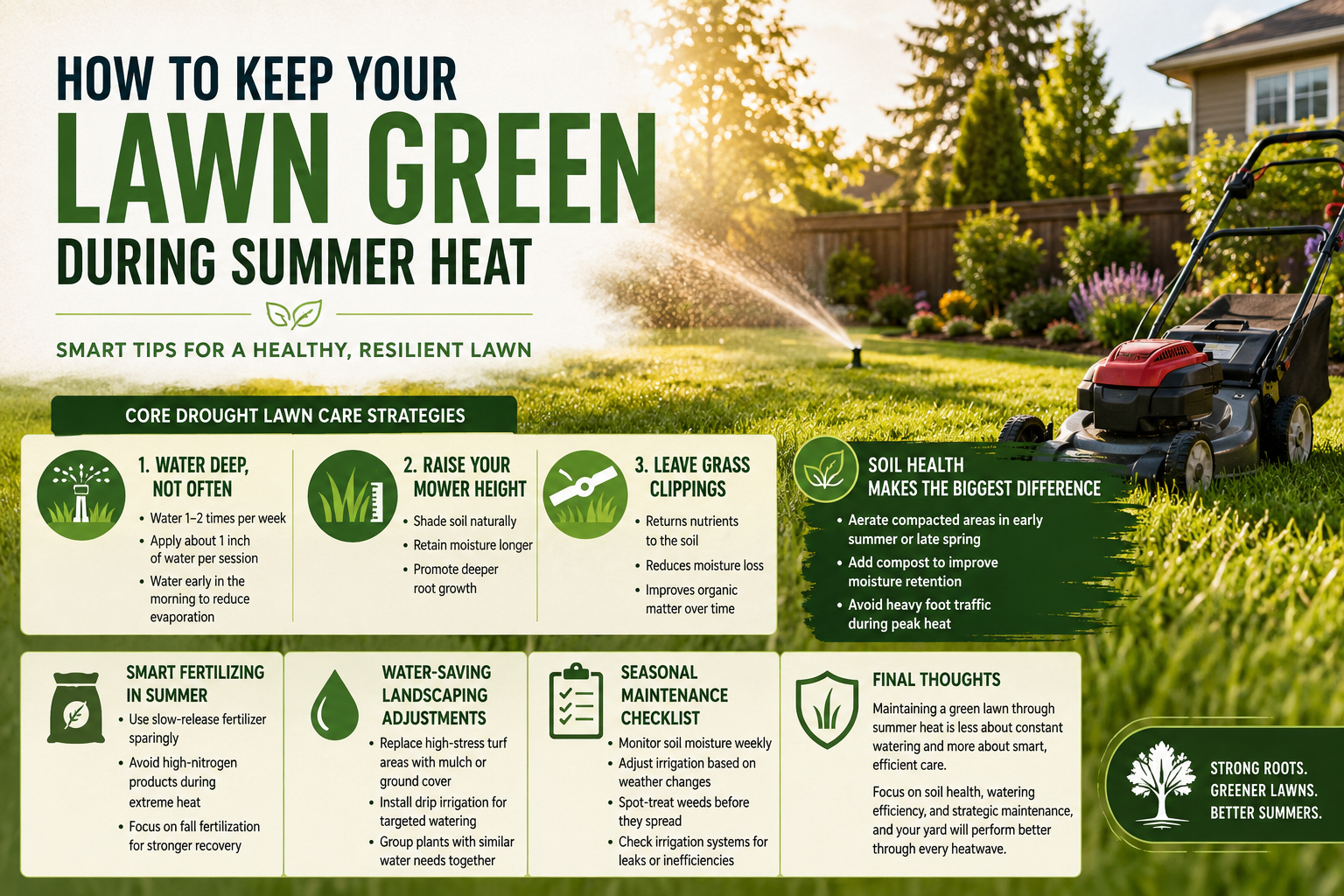
 Hot, dry summers in the Pacific Northwest can quickly stress even well-established lawns. With rising temperatures and limited rainfall, maintaining a healthy yard requires a shift in routine and strategy. These practical summer landscaping tips will help homeowners keep turf green, reduce water waste, and improve long-term lawn resilience.
Understand Summer Lawn Stress
During peak summer heat, grass slows its growth to conserve energy. In regions like Camas, Washington, extended dry periods can lead to:
- Browning or dormancy
- Thin or patchy turf
- Soil compaction and reduced water absorption
The goal is not to force constant growth, but to support root health and prevent permanent damage.
Core Drought Lawn Care Strategies
Effective drought lawn care focuses on water efficiency and soil health rather than frequent watering.
1. Water Deep, Not Often
Shallow daily watering encourages weak roots. Instead:
- Water 1–2 times per week
- Apply about 1 inch of water per session
- Water early in the morning to reduce evaporation
2. Raise Your Mower Height
Cutting grass too short exposes soil and increases heat stress. Set blades higher to:
- Shade soil naturally
- Retain moisture longer
- Promote deeper root growth
3. Leave Grass Clippings
Mulching clippings back into the lawn:
- Returns nutrients to the soil
- Reduces moisture loss
- Improves organic matter over time
Soil Health Makes the Biggest Difference
Healthy soil is the foundation of any effective lawn care plan.
- Aerate compacted areas in early summer or late spring
- Add compost to improve moisture retention
- Avoid heavy foot traffic during peak heat
Soil that absorbs water efficiently reduces runoff and keeps roots hydrated longer.
Smart Fertilizing in Summer
Over-fertilizing during hot weather can stress grass. Instead:
- Use slow-release fertilizer sparingly
- Avoid high-nitrogen products during extreme heat
- Focus on fall fertilization for stronger recovery
Water-Saving Landscaping Adjustments
Reducing lawn dependency is one of the most effective long-term strategies:
- Replace high-stress turf areas with mulch or ground cover
- Install drip irrigation for targeted watering
- Group plants with similar water needs together
These adjustments reduce maintenance while improving landscape sustainability.
Seasonal Maintenance Checklist
To stay ahead of summer stress:
- Monitor soil moisture weekly
- Adjust irrigation based on weather changes
- Spot-treat weeds before they spread
- Check irrigation systems for leaks or inefficiencies
Final Thoughts
Maintaining a green lawn through summer heat is less about constant watering and more about smart, efficient care. With consistent drought lawn care practices and thoughtful summer landscaping tips, homeowners in areas like Camas, WA can protect their yards while reducing water use and maintenance costs.
A resilient lawn is built over time—focus on soil health, watering efficiency, and strategic maintenance, and your yard will perform better through every heatwave.